Connected systems improve Google visibility, conversions, and repeat visits automatically.
The best marketing systems focus on outcomes: more reservations, more repeat customers, and predictable revenue.
Lower visibility leads to fewer website visitors, which leads to fewer reservations. That’s not just a marketing problem. It’s a revenue problem.
Restaurant marketing feels complicated because most restaurants rely on disconnected tools that don’t work together.
You’re updating your website in one place. Managing reservations somewhere else. Responding to Google reviews. Sending emails. Posting on social media.
It’s not that you’re behind. It’s that your system is fragmented.
Meanwhile, diners are making decisions in seconds. If your website is slow, your Google listing is outdated, or booking isn’t seamless, they move on.
Restaurant marketing shouldn’t feel like a second full-time job. And it doesn’t have to.
Why Is Restaurant Marketing So Complicated?
Restaurant marketing feels complicated because it is spread across multiple disconnected platforms that require constant manual effort.
Most restaurants use separate tools for:
Website management
Online reservations
Google Business Profile
Reviews and reputation management
Email and text marketing
Social media and promotions
POS and guest data
This creates problems like:
Duplicate work across platforms
Inconsistent menus, hours, and information
Missed marketing opportunities
Unclear performance tracking
Instead of running one system, you’re managing multiple tasks—and that complexity adds up quickly.
Instead of reacting constantly, your marketing runs continuously in the background, attracting new guests and bringing past guests back.
How Do Disconnected Tools Hurt Restaurant SEO and Revenue?
Disconnected tools hurt restaurant SEO because inconsistent information lowers your visibility in Google search results.
When your systems don’t connect:
Menus and hours become inconsistent
Google loses trust in your data
Rankings drop in local search results
Fewer diners discover your restaurant
The result:
Less visibility → fewer website visits → fewer reservations → lost revenue
When your digital presence isn’t aligned, your marketing doesn’t just become inefficient—it becomes ineffective.
How Does a Restaurant Website Drive Revenue?
A restaurant website drives revenue by converting visitors into reservations, orders, and inquiries.
A high-performing website should:
Make reservations and ordering easy
Display menu, hours, and location clearly
Capture guest data automatically
Integrate with Google and SEO systems
Encourage reviews and repeat visits
When connected to your marketing system, your website becomes your most powerful revenue channel—not just an online menu.
How Do You Know If Your Restaurant Marketing Is Working?
Restaurant marketing is working when it consistently turns visibility into measurable revenue.
Key indicators include:
More Google search impressions and clicks
Increased website traffic
Higher reservation and inquiry conversions
Growth in reviews and ratings
More repeat visits from email and text campaigns
If your tools aren’t connected, these results are difficult to track—and even harder to improve.
What Does a Unified Restaurant Marketing System Look Like?
A unified restaurant marketing system connects every part of your digital presence into one coordinated engine.
Instead of managing tools, you have:
A website designed to convert
Automatic reservation and guest data capture
Integrated review management
Email and text campaigns running continuously
Consistent Google visibility improvements
When everything works together, your marketing becomes predictable—and your revenue becomes more stable.
Why Does Restaurant Marketing Work Better as a System?
Restaurant marketing works better as a system because diners experience your brand as one seamless journey—not separate channels.
Diners follow this path:
Search on Google
Visit your website
Check reviews
Book a reservation
If any step is confusing or disconnected, they leave.
Restaurants that grow consistently:
Rank well on Google
Make booking effortless
Follow up automatically
Turn guests into repeat customers
In a digital-first world, the easiest restaurant to discover and book wins.
Unified Marketing vs. Disconnected Tools: What’s the Difference?
The difference between unified marketing and disconnected tools is consistency, efficiency, and revenue impact.
Disconnected Tools
Unified Marketing System
Multiple platforms to manage
One connected system
Inconsistent data across channels
Consistent, synchronized information
Manual updates and repetitive work
Automated updates and workflows
Limited visibility into performance
Clear reporting and insights
Missed opportunities for follow-up
Automated guest engagement
Lower SEO performance
Stronger Google rankings
How to Simplify Restaurant Marketing?
To simplify restaurant marketing, replace disconnected tools with a unified system that automates visibility, engagement, and conversions.
Follow these steps:
Consolidate your website, SEO, and reservations into one platform
Ensure your Google Business Profile is fully optimized
Automate review collection and responses
Use email and text marketing for repeat engagement
Track performance in one centralized dashboard
The goal isn’t to do more marketing—it’s to make your marketing work better.
How Can You Simplify Your Restaurant Marketing Today?
If your marketing feels overwhelming, it’s not because you’re doing it wrong. It’s because your tools aren’t working together.
SpotHopper combines:
Restaurant website design
Built-in SEO
Google review management
Email and text marketing
All-in-one system designed to:
Increase visibility
Convert more guests
Fill slow nights
If you’re curious about how ShopHopper’s AI marketing can help your restaurant, book a free 15-minute demo and see how marketing can finally feel simple—and effective.
Frequently Asked Questions
What is a restaurant marketing system?
A restaurant marketing system is a unified platform that connects your website, SEO, reservations, reviews, and guest communication.
It allows all marketing channels to work together, helping restaurants attract new customers, convert website visitors into reservations, and increase repeat visits without managing multiple tools.
Why does restaurant marketing feel so complicated?
Restaurant marketing feels complicated because most restaurants use multiple disconnected tools that require constant manual effort.
This fragmentation leads to inconsistent information, extra work, and difficulty tracking results, making marketing feel overwhelming and inefficient.
How do disconnected tools affect restaurant SEO?
Disconnected tools hurt restaurant SEO by creating inconsistent business information across platforms.
Search engines prioritize accurate and consistent data, so mismatches in menus, hours, or location details can reduce visibility in local search results and lead to fewer customers.
How does a restaurant website drive revenue?
A restaurant website drives revenue by converting visitors into reservations, orders, and inquiries.
High-performing websites make key information easy to find, include clear calls to action, and integrate with SEO and marketing systems to attract and convert more diners.
What are the benefits of a unified restaurant marketing system?
A unified restaurant marketing system improves efficiency, visibility, and revenue.
It connects marketing tools into one platform, making it easier to manage campaigns, improve search rankings, track performance, and increase both new and repeat customers.
Keep learning about Restaurant Marketing
Restaurant Marketing
Restaurant Marketing in 2026
Restaurant marketing in 2026 is the process of helping diners find your restaurant online, choose it over competitors, and return through digital channels like Google, your website, and online reviews.
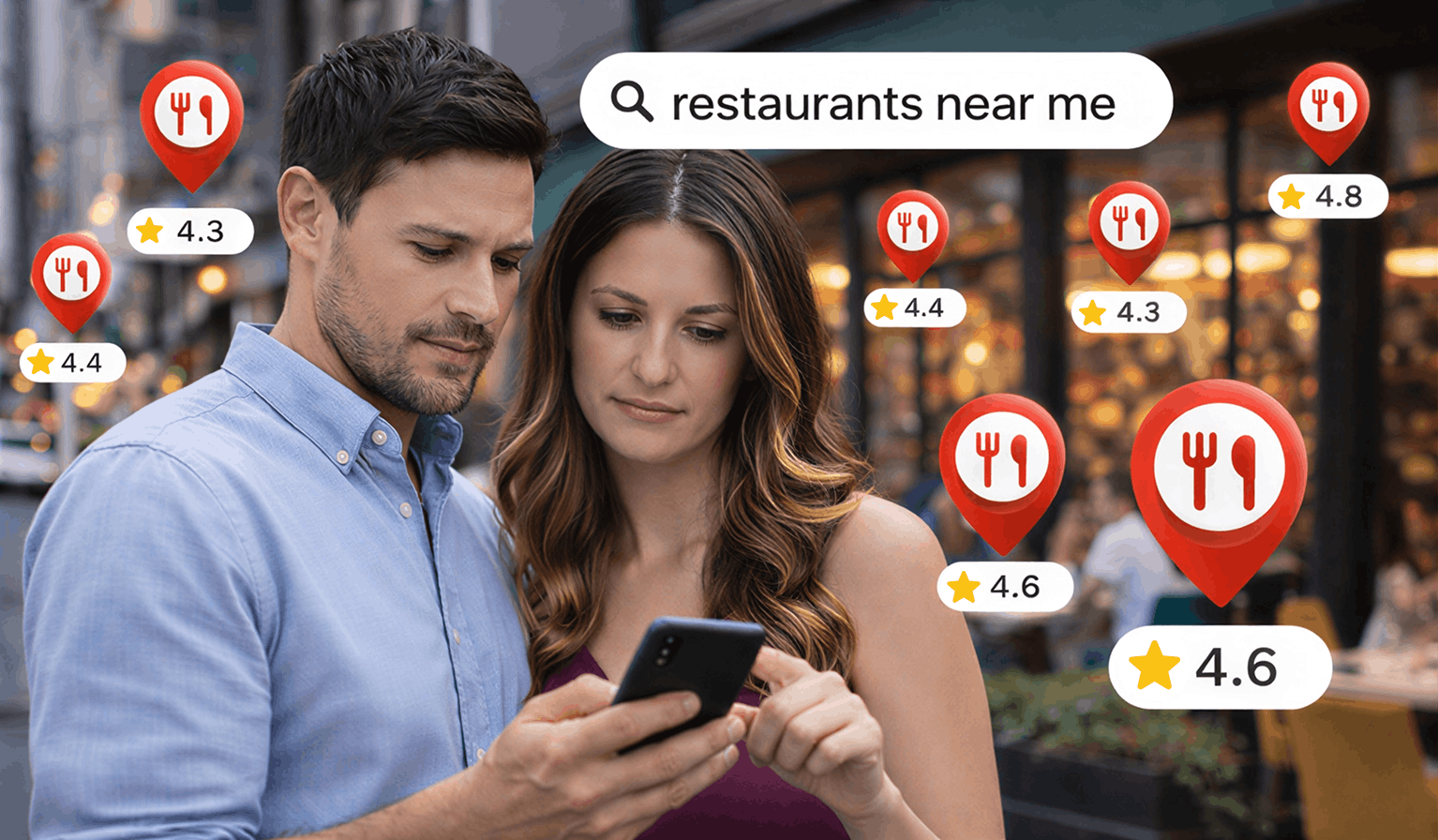
Today, most dining decisions start on a mobile phone. Before a guest walks through your doors, they’ve already searched “restaurants near me,” compared options, read reviews, and looked at photos.