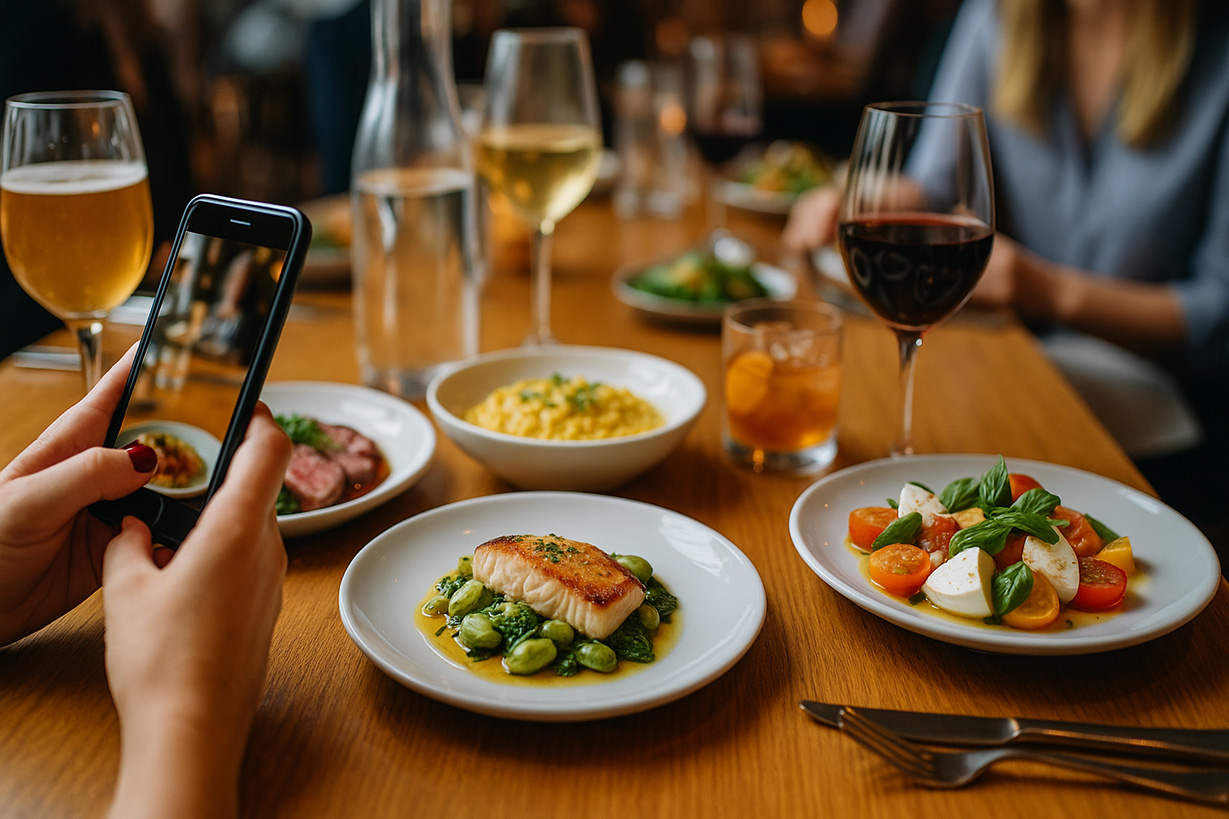
Restaurant Marketing
Why Restaurant Marketing Works Better as a System, Not a Set of Tools
Restaurant marketing feels complicated because most restaurants rely on disconnected tools that don’t work together.
Read StoryIf Diners Can’t Find You Online, You Don’t Exist
Restaurant Marketing • 03/10/2026
Restaurant marketing is using digital channels—like SEO, your website, Google, reviews, email, and text—to help diners find you, choose you, and come back.
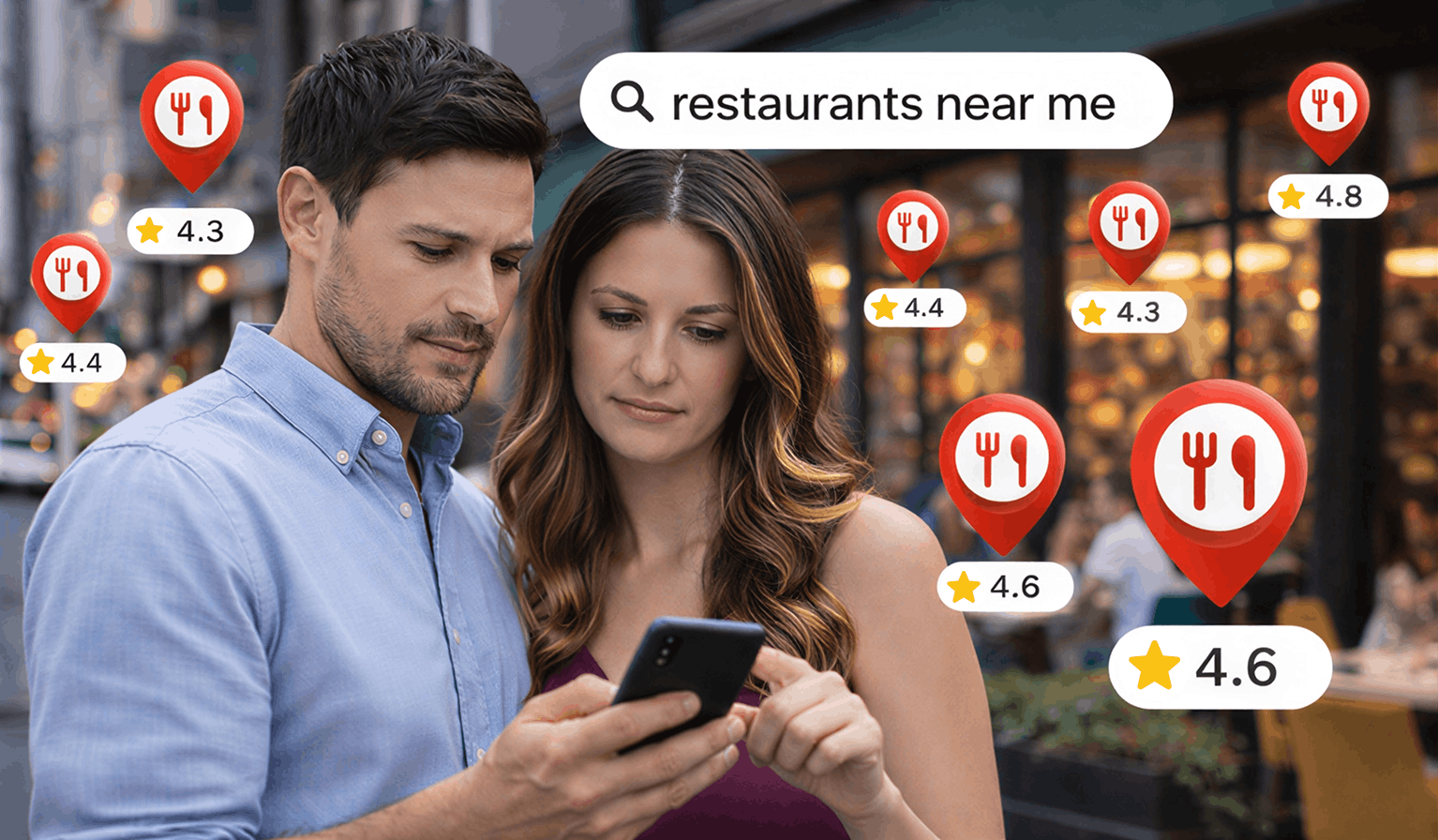
If diners can’t find your restaurant when they search, nothing else—your food, service, or experience—has a chance to influence their decision.
Restaurant marketing in 2026 is the process of helping diners find your restaurant online, choose it over competitors, and return through digital channels like Google, your website, and online reviews.
Today, most dining decisions start on a mobile phone. Before a guest walks through your doors, they’ve already searched “restaurants near me,” compared options, read reviews, and looked at photos.
If your restaurant doesn’t appear—or doesn’t stand out—you’re not just missing clicks. You’re losing customers to competitors who are easier to find and trust.
In 2026, restaurant marketing isn’t just advertising. It’s your visibility, reputation, and ability to consistently fill tables.
86% of diners research a restaurant online before visiting through Google by searching phrases like “restaurants near me” or “best brunch near me.” In fact, Google ranks restaurants based on three primary factors: relevance, distance, and prominence.
Google ranks restaurants based on:
Your website is one of the most important drivers of restaurant SEO. It should be fast, mobile-friendly, and built specifically for search visibility.
Your menu, hours, location, and key information should be easy to find. Each page should focus on a specific offering (catering, private dining, reservations), with clear calls to action. Menus should be published as searchable content, not PDFs.
If your website is slow, outdated, or difficult to navigate, Google will rank you lower, and most diners won’t scroll far enough to find you.
Your Google Business Profile is the most important ranking factor for local restaurant discovery because it determines your visibility in Google Search and Maps.
It displays your hours, menu, photos, reviews, location, and directions—often before someone ever visits your website.
To improve your visibility:
If your restaurant doesn’t appear in top search results, you’re invisible at the exact moment someone is ready to choose where to eat.
Restaurants get more customers by improving their visibility in search results, clearly communicating their value, and building trust through reviews and photos.
Restaurants attract more customers when they:
In 2026, diners have endless options—chains, delivery apps, ghost kitchens, and local competitors.
Your digital presence must answer one question instantly: Why this restaurant?
Compare these two examples:
The second tells a story. Clear positioning turns searches into reservations.
If competitors communicate their value better online, they win the booking, even if your food is better.
Online reviews and photos are two of the most important factors influencing whether diners choose your restaurant.
Reviews build trust and improve rankings, while photos help diners quickly evaluate your experience.
When comparing restaurants, diners typically choose the one with:
Photos help diners quickly decide if your restaurant matches their expectations.
High-quality, up-to-date images increase clicks, engagement, and conversions. If your photos are outdated or missing, diners may assume the experience isn’t worth the visit.
Google reviews influence both trust and visibility in search results because they act as ranking signals and social proof. In fact, 94% of U.S. diners base dining decisions on online reviews, and 88% trust them as much as personal recommendations.
Google evaluates review quantity, recency, and ratings when ranking restaurants. Businesses with frequent, positive reviews and active owner responses are more likely to appear higher in search results—and get chosen.
Restaurants turn first-time guests into repeat customers by staying connected through email, text marketing, and ongoing engagement.
Repeat guests create predictable revenue. Without consistent follow-up, even satisfied diners forget to return.
Effective retention strategies include:
Staying top-of-mind fills slow nights, drives catering, and stabilizes revenue.
Restaurants that win in 2026 don’t just attract traffic. They operate a connected marketing system that keeps customers coming back.
To improve your restaurant marketing in 2026, focus on visibility, conversion, and retention.
Follow these steps:
Every day your marketing isn’t optimized, competitors are capturing your potential customers.
Not because they’re better restaurants, but because they’re easier to find.
The most important factor in restaurant marketing is visibility in local search results, especially on Google.
If diners can’t find your restaurant when they search, nothing else—your food, service, or experience—has a chance to influence their decision.
Your website, Google Business Profile, and reviews work together to determine whether you appear, and whether diners choose you.
If you’d like to simplify your marketing with minimal effort, SpotHopper builds SEO-optimized restaurant websites synced with your Google Business Profile, automated review management, and AI-powered email, text campaigns, and social media—all designed to help independent restaurants compete and fill more tables.
Restaurant marketing in 2026 is the process of helping diners find, evaluate, and return to your restaurant through digital channels. This includes local SEO, your website, Google Business Profile, online reviews, and retention through email and text marketing.
Most diners find restaurants through Google Search and Google Maps using queries like “restaurants near me.” Google ranks results based on website quality, business profile optimization, reviews, photos, and location relevance.
The most important elements of restaurant SEO are your website, Google Business Profile, and online reviews. A fast, mobile-friendly site, consistent business information, active reviews, and strong photos all help improve rankings.
A Google Business Profile is critical because it determines your visibility in Google Search and Maps. A complete and active profile helps restaurants rank higher and attract more diners ready to choose where to eat.
Online reviews affect both rankings and trust. Google uses review volume, recency, and ratings as ranking signals, and diners rely on reviews to decide where to eat.
Restaurant marketing feels complicated because most restaurants rely on disconnected tools that don’t work together.
Read Story